
Material Nation: 250 Years of American Quilts
Material Nation: 250 Years of American Quilts

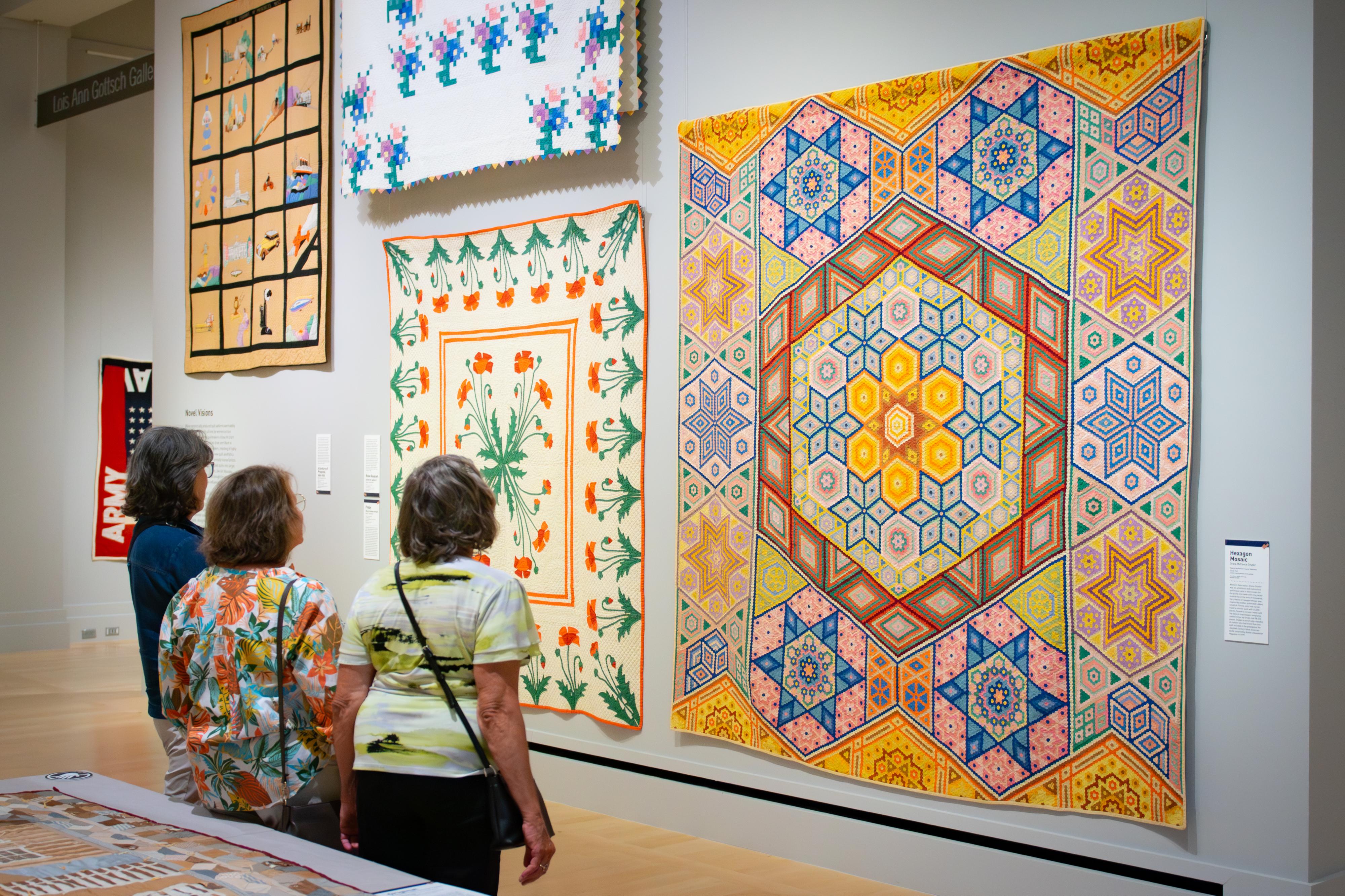
As part of "Handwork: Celebrating American Craft 2026," the International Quilt Museum presents "Material Nation: 250 Years of American Quilts," a major exhibition tracing the history of quiltmaking in the United States from the nation’s founding to the present. Drawn primarily from the museum’s internationally recognized collection, the exhibition situates quilts as central works of American material culture, reflecting creativity, community life, and the many forms of work and care that surround quiltmaking across more than two centuries.

The exhibition considers quilts within the many contexts in which they have been made and understood. Some works reflect how quiltmaking knowledge has been taught, shared, and sometimes mythologized, shaping what quilts have meant to different generations. Others reveal how patterns, techniques, and ideas move across time, linking past and present through persistent forms and new interpretations. Visitors will encounter quilts made for the marketplace alongside pieces that explore design, structure, and the very boundaries of the quilt itself. Throughout the exhibition, quilts connected to migration, education, patriotism, identity, and community life reflect the many ways quiltmaking has participated in and responded to the broader currents of American experience.

Together, these works trace quiltmaking across domestic, communal, and professional contexts and into contemporary practice. They reflect both continuity and change within a tradition sustained by skill, creativity, and community. From early masterworks to modern experiments and contemporary statements, Material Nation presents the quilt as a dynamic and deeply resonant presence in American material culture.

*While many of our galleries are currently open, some are closed as we work to install this museum-wide exhibition. "Material Nation" will be on display in its entirety July 2.*

American Expressions: Pride and Patriotism

American Expressions: Pride and Patriotism

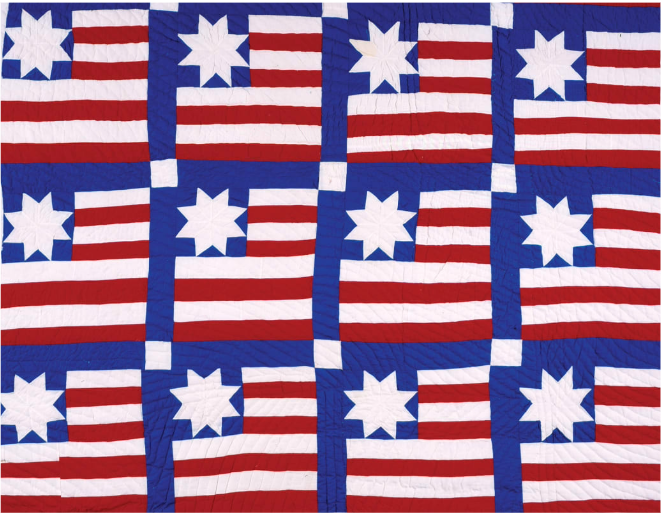
The quilts displayed here are undeniable expressions of women’s political and patriotic opinions—sensibilities portrayed with needle and thread. They are vital to our understanding of women’s experiences, as many quilts were made during a time when women did not have the opportunity to participate in other types of art making or writing nor were they able to exercise their right to vote. Quiltmaking gave women a vehicle to express opinions and advocate for social change in movements such as abolition, women's suffrage, and temperance. Today, quilts continue to provide a canvas for personal expression and activism.

American Innovation: 1790s - 1860s

American Innovation: 1790s - 1860s

American quiltmaking is a 400-year story of global trade, technology, and entrepreneurial imagination. The introduction of cotton fabrics and design from India and Asian countries in the seventeenth century prompted developments in textile production that helped to launch the Industrial Revolution. In turn, those advances made cotton textiles, the “thread” that holds the story of quiltmaking together, available to all.

American quilts tell the stories of the many individuals not included in the written history of the U.S. The women, immigrants, communities of color, and others who embraced quiltmaking created visual evidence of their lives, and of the hope they held for future generations.

American Creativity: 1870s to 1970s

American Creativity: 1870s to 1970s

The century between the 1870s and the 1970s was one of almost mind-boggling change in the world of quiltmaking. Technological and commercial advancements such as expanding availability of sewing machines, cheaper fabrics, innovative production methods, and mass market publications combined to transform people’s ability to make quilts. At the same time, designers, artists, and everyday people spearheaded innovative approaches and aesthetics—from utilizing kits and patterns to shifting quilts from the bed to the wall. Together, these developments led to a golden age of creativity, when quiltmaking flourished in diverse households and studios across the country.  

After 1870, America’s industrialization and manufacturing increased dramatically. Fabric production, for instance, grew by leaps and bounds, with one New York cotton mill at its peak churning out 100,000 yards of cloth every 60 hours. This variety and quantity of fabrics meant that everyday makers could construct a host of new, colorful, and visually complex quilts. At the same time, the ever-increasing availability of sewing machines meant they could do it more quickly. By the end of the nineteenth century, manufacturers produced over 20 million sewing machines annually, and when paid for in installments, even working-class individuals could afford one.

Although mass-produced materials were abundantly available, poorer families could not always buy them, especially during economic downturns. Hard times hit Americans at several points throughout the late 1800s and 1900s, with the Great Depression of the 1930s being the hardest. As a result, quiltmakers often cut up old clothing, utilized the tiniest cloth scraps, and reused fabrics that had originally served other purposes. Featuring textiles ranging from handkerchiefs to commercial sacks to silk ties, quilts of this era highlight the innovation and resourcefulness of their makers.

During this quiltmaking boom, makers experimented with familiar quilt patterns, presenting them in both expected and unorthodox ways. The standard Log Cabin block, which is divided diagonally into light and dark halves, can be configured in common settings, such as those called Barn Raising or Straight Furrows, or they can be laid out in wholly unique ways. Similarly, they can be constructed using common materials, like the widely available cotton calicoes of the era, or novel ones, such as machine quilted garment linings or, as we move into the 1960s and ‘70s, brightly patterned polyester knits.

American Identities: Quilts from 1970 to Today

American Identities: Quilts from 1970 to Today

Since the mid-twentieth century, American quiltmaking has emerged as a powerful vehicle for expressing identity and engaging with social transformation. These textiles document pivotal historical moments while preserving cultural traditions shaped by migration and resettlement. Works by Black and Indigenous makers demonstrate quilting as a site of cultural continuity, storytelling, and resistance. Simultaneously, the medium has expanded into fashion and fine art, with the art quilt movement exploring abstraction and new materials. Through workshops, publications, and guilds, quilting knowledge has spread widely, enabling broader creative participation. Today, quilts remain vital forms for articulating personal narrative while addressing collective histories of race, environment, and cultural resilience. 

American Commemoration

American Commemoration

For centuries, commemoration has served as a unifying force for Americans, with historical milestones providing natural occasions for collective celebration. Significant anniversaries—such as the 1976 Bicentennial and the restoration of landmarks like the Statue of Liberty—offer vital moments for both national reflection and artistic inspiration.

This gallery showcases commemoration through the lens of local artistry. Hortense Beck, a prolific Kansas quiltmaker, created Lady Liberty, an original design, as well as several historic replicas. Alongside her work, the Lincoln Quilters Guild’s Bicentennial Quilt highlights how local guilds contribute to national milestones.

Beyond individual artistry, quiltmakers have long commemorated the nation by embedding civic pride directly into the fabric of their work. This is often expressed through patriotic iconography—such as flags, eagles, and stars—or by naming patterns to honor influential women like Dolley Madison and Martha Washington. Through these symbolic choices, quilts became a powerful medium for storytelling and tribute.

Quiltmaking Today

Quiltmaking Today
Quiltmaking Today

Quiltmaking is woven into the fabric of American history and remains a vibrant and evolving practice today. While the tools and technologies available to makers have changed over time, the essence of the artistry endures: a meaningful relationship between the maker, the materials, and the stories they seek to tell.

For some, quilts evoke memories of family, home, and cherished connections. For others, quiltmaking serves as a powerful outlet for artistic expression and innovation. Today, quilts are created in every corner of society by makers of all backgrounds, reflecting a remarkable diversity of voices, experiences, and perspectives.

Virtual Gallery

Virtual Gallery
Virtual Gallery
Event Date
Thursday, July 2, 2026 to Saturday, December 19, 2026