
Our Building and Garden

Our Building and Garden
Museum exterior

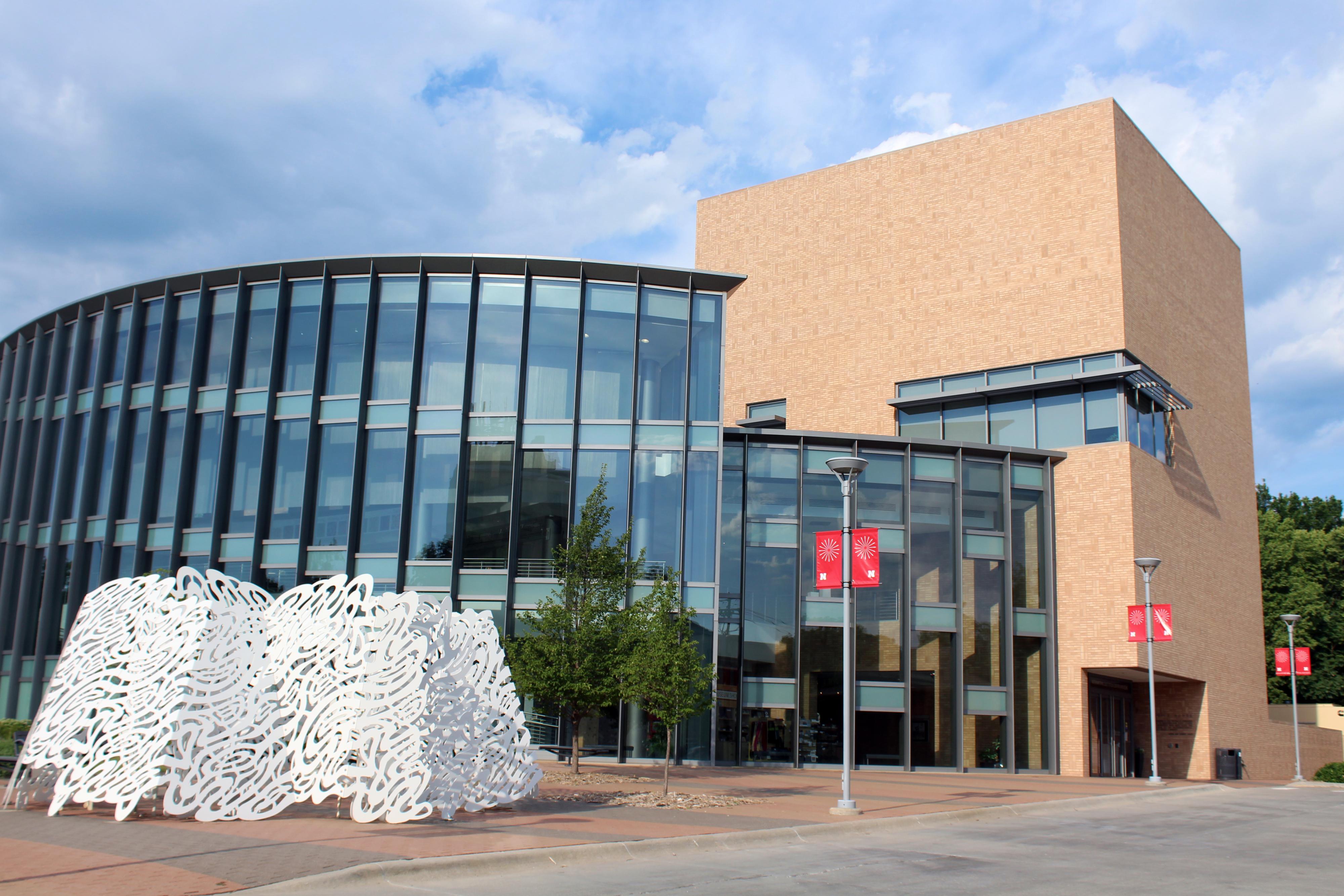
The International Quilt Museum is located on the University of Nebraska-Lincoln's East Campus. The building and its garden were all designed with quilts and quiltmaking in mind.

In the tabs below, you can learn more about the design of the building and garden.

Horizontal Tabs

The Architecture
Museum exterior

The International Quilt Museum was designed by the internationally renowned Robert A.M. Stern Architects of New York with local architects Alley, Poyner, Macchietto Architects of Omaha. Hawkins Construction was the contractor.

It was funded entirely by private gifts, including a leadership gift from the Robert and Ardis James Foundation of Chappaqua, New York, and donations from private individuals and more than 130 quilt guilds.
The museum opened in 2008 and an expansion—which doubled the size of the galleries and quilt storage—opened in 2013.

© Peter Aaron/Esto 

Museum windows

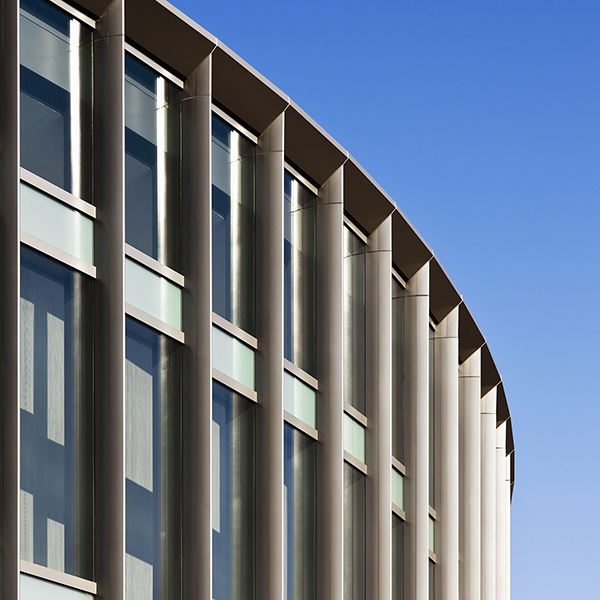
The architects intended the structure to resemble the three layers of a quilt. The glass curtain wall—with its linear metal bars—resemble quilt stitches. 

© Peter Aaron/Esto 

Gallery interior

The galleries, conservation workroom and storage room represent the batting or filling. 

© Peter Aaron/Esto 

Museum exterior

And the back-of-house support areas and offices represent the quilt back.

© Peter Aaron/Esto 

Museum reception hall

You can see another nod to quiltmaking in the Reception Hall, which is shaped like the eye of a needle. 

© Peter Aaron/Esto 

Museum exterior

The brick facade and relief around the building are done to look like quilt blocks.

© Peter Aaron/Esto 

The Architecture
The Garden
Garden

The International Quilt Museum’s Marion E. and Barbara B. Tritsch Garden was designed in a grid to resemble quilt blocks stitched together. The perennials and shrubs in the garden are ornamental varieties that provide year-round color. The plants were chosen because of their variety of flower color, leaf color and texture so when placed next to each other they accentuate the quilt block design. It is planted and maintained by the University of Nebraska-Lincoln’s Landscape Services team.

Thank you to by Eileen Bergt, Landscape Architecht and Assistant Director of Landscape Services, who provided these photos and to Eileen and and the Landscape Services Team for keeping our garden beautiful.

Blue Shag Pine

Blue Shag White Pine (Pinus strobus ‘Blue Shag’)

Green Velvet Boxwood

Green Velvet Boxwood (Buxus ‘Green Velvet’)

Little Henry Sweetspire

Little Henry Sweetspire (Itea virginica ‘Little Henry’)

Tor Spirea

Tor Spirea (Spiraea betulifolia ‘Tor’)

Helene von Stein Lambs Ears

Helene von Stein Lambs Ears (Stachys byzantine ‘Helene von Stein’)

Purple Coneflower

Purple Coneflower (Echinacea purpurea)

Zagreb Coreopsis

Zagreb Coreopsis (Coreopsis verticillata ‘Zagreb’)

Blue False Indigo

Blue False Indigo (Baptisia australis)

Autumn Joy Sedum

Autumn Joy Sedum (Sedum spectabile ‘Herbstfreude’)

Caesar’s Brother Siberian Iris

Caesar’s Brother Siberian Iris (Iris ‘Caesar’s Brother’)

Blaze Little Bluestem

Blaze Little Bluestem (Schizachyrium scoparium ‘Blaze’)

Buffalo grass and Fescue mix

Buffalo grass and Fescue mix

The Garden
The Sculpture
Museum exterior with sculpture

The sculpture by Linda Fleming of Colorado and California, is titled “Reverie.” It is formally a part of the collections of the University of Nebraska-Lincoln’s Sheldon Museum of Art. The Duncan Family Sculpture was commissioned and donated in honor of longtime quilter and local resident Betty Duncan by her children Robert Duncan, Dianne Duncan Thomas, and Kathryn Duncan.

Artist statement: “Place has always been central to my work. It is not the subject of the work but provides the conditions that allow the work to exist.” The art includes the space within and around the sculpture, the shadows and stripes created by sunlight, and the full range of tones of the powder coated steel. 

The 14’ x 27’ sculpture was fabricated by TMCO of Lincoln and installed by Davis Erection. It is located in the Marion E. and Barbara B. Tritsch Garden.

The Sculpture
Support for this exhibition has been provided by Humanities Nebraska and National Endowment for the Humanities.